

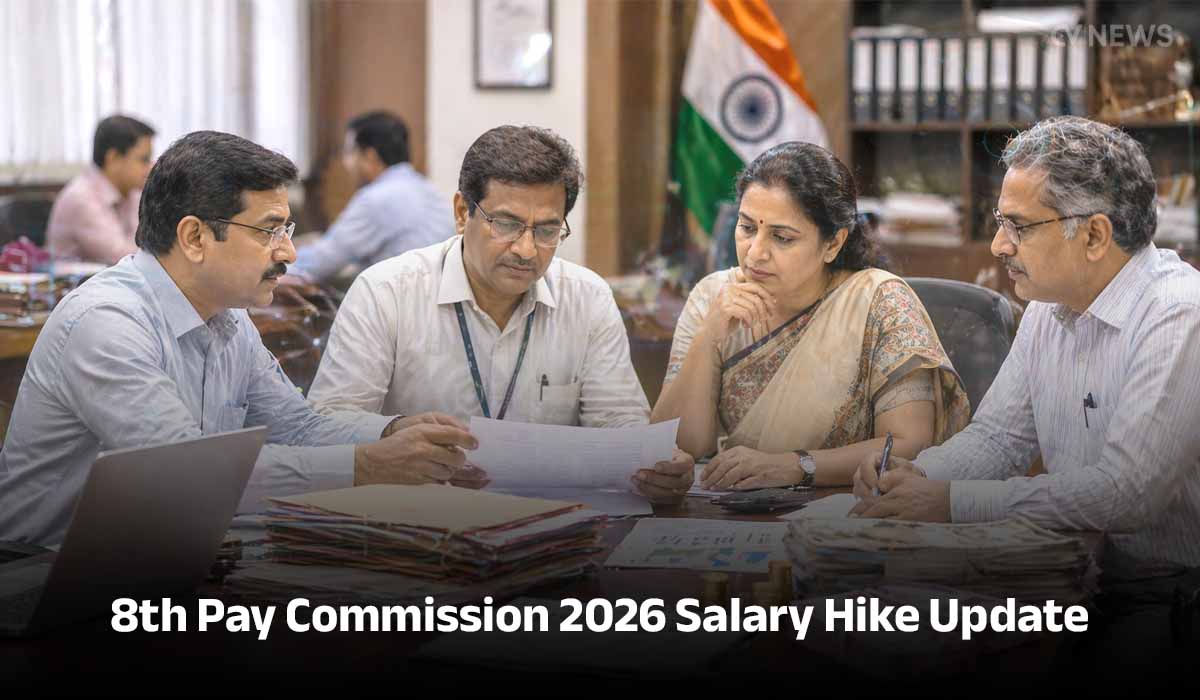
India is moving closer to implementing the 8th Pay Commission, a development that could significantly reshape the salary structure of central government employees and pensioners across the country. While the government has not yet officially constituted the commission, discussions and proposals from employee unions and policy bodies have already triggered widespread attention. The 8th Pay Commission is expected to revise basic pay, allowances, and pension structures, continuing the cycle of periodic wage adjustments that began with earlier commissions. These revisions are typically aligned with inflation, economic growth, and cost-of-living changes, making them a critical financial event for millions of households.
One of the most widely discussed projections suggests that the minimum basic salary could see a substantial increase compared to the current ₹18,000 set under the 7th Pay Commission. Some proposals from employee representatives indicate a possible revision to around ₹26,000–₹30,000 as a realistic baseline, while more aggressive demands have pushed figures even higher. However, claims of a jump to ₹60,000 or above are largely speculative at this stage and not backed by any official confirmation. The final recommendation will depend on the fitment factor, a key multiplier used to revise salaries, which was set at 2.57 in the 7th Pay Commission and could be revised upward in the upcoming cycle.

The potential impact of the 8th Pay Commission extends beyond salary increments. It could influence allowances such as house rent allowance (HRA), travel allowance (TA), and dearness allowance (DA), all of which play a major role in the overall income of government employees. Pensioners are also expected to benefit from revised pension calculations, ensuring that retired employees maintain purchasing power in a changing economic environment. In total, the decision could affect over 50 lakh central government employees and nearly 65 lakh pensioners, making it one of the most significant fiscal measures in the public sector.

From an economic perspective, a major salary revision under the 8th Pay Commission could boost consumption across sectors such as housing, automobiles, and consumer goods. Increased disposable income among government employees often leads to higher spending, which can stimulate economic activity. At the same time, it also places pressure on government finances, as higher salary and pension payouts increase fiscal expenditure. Balancing employee welfare with fiscal discipline will therefore be a key challenge for policymakers.
The timeline for implementation remains uncertain, but traditionally, pay commissions are introduced every 10 years, suggesting that the next revision could come into effect around 2026. As discussions continue, employees, economists, and policymakers are closely watching for official announcements from the Government of India. Until then, most figures circulating online should be treated as projections rather than confirmed outcomes. The 8th Pay Commission, when finalized, is expected to play a crucial role in shaping the financial landscape of India’s public sector workforce for the next decade.





Comments (0)
No comments yet. Be the first to comment!
Leave a Comment