

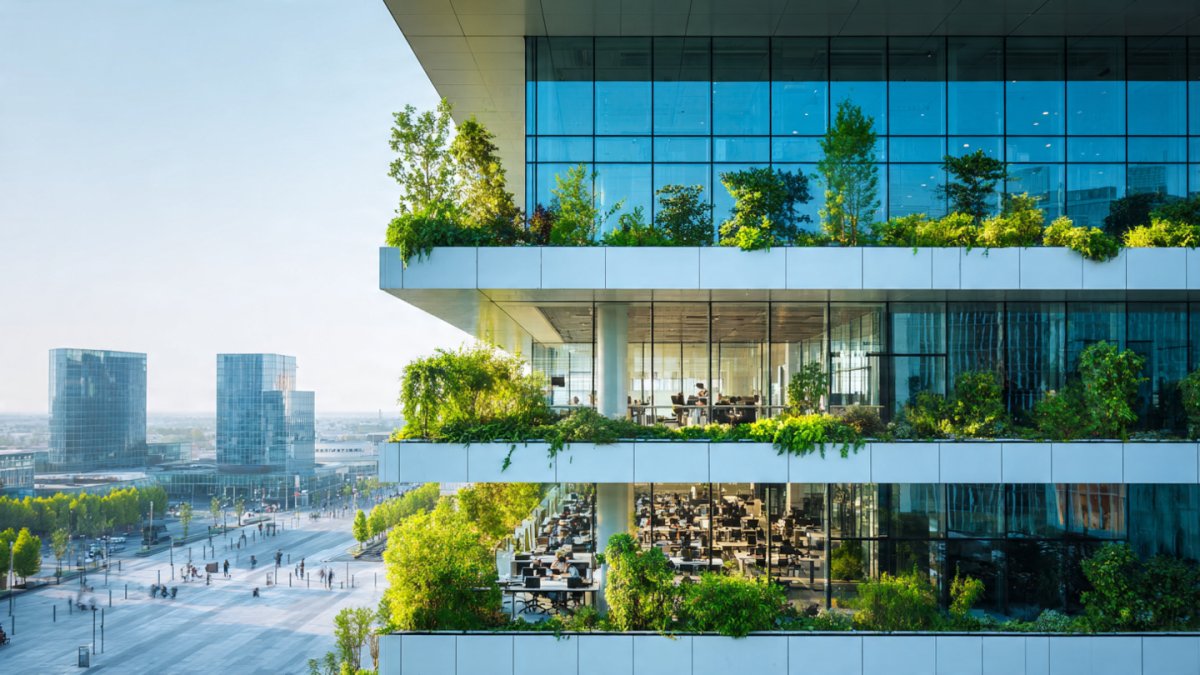
By 2026, the global workplace has moved far beyond the emergency shift to remote work seen in the early 2020s. What began as a necessity has evolved into a structured hybrid model, where organizations balance flexibility with operational efficiency. Most companies now operate with a mix of remote and in-office roles, shaped by productivity data, employee preferences, and cost considerations.


Recent global workforce studies indicate that a significant share of professionals now work remotely at least part of the week, while fully office-based roles continue to decline in sectors such as technology, consulting, and digital services. This transition has led businesses to rethink how they allocate resources, manage teams, and measure performance. The result is not just a workplace shift but a broader economic adjustment, where companies are redistributing spending away from physical infrastructure toward digital systems, talent acquisition, and long-term operational flexibility.
One of the most visible impacts of this shift can be seen in commercial real estate. Traditional large office spaces are no longer the default model for many organizations. Instead, businesses are adopting flexible workspaces, satellite offices, and co-working environments that better align with hybrid schedules. In several global cities, vacancy rates for conventional office spaces have fluctuated, prompting developers and investors to reconsider how commercial properties are used. A growing number of buildings are being adapted into mixed-use developments, combining residential, retail, and office functions to remain economically viable.
This change is gradually redefining the role of central business districts. Rather than serving as daily workplaces for large populations, these areas are evolving into multi-purpose urban zones that support a mix of business activity, living spaces, and services. For investors, this means that long-term value is increasingly tied to adaptability, as properties that can serve multiple functions or adjust to changing demand patterns are becoming more attractive than single-use office assets.
As physical workplaces become more flexible, digital infrastructure has taken center stage. Organizations are investing heavily in cloud-based platforms, collaboration tools, and cybersecurity systems to support distributed teams. Cloud computing adoption continues to expand across industries, allowing companies to operate seamlessly across different locations. Software-as-a-service platforms have become essential for communication, project management, and workflow automation, forming the backbone of modern business operations.
At the same time, the rise of remote work has increased the importance of cybersecurity. With employees accessing systems from multiple locations and devices, businesses must ensure secure data environments and compliance with evolving regulations. Artificial intelligence and automation are also becoming integrated into daily workflows, helping maintain efficiency in a decentralized work environment while requiring careful oversight and responsible implementation.
The changing workplace model has significantly altered how companies approach talent. Geographic boundaries are no longer a primary limitation, allowing organizations to hire from a global pool of skilled professionals. This has increased competition for talent while also creating new opportunities for workers in regions that were previously underrepresented in global markets. Cost structures are evolving as well, with businesses reducing spending on large office spaces while increasing investment in technology, employee benefits, and remote work support systems.
From a sustainability perspective, reduced commuting and lower reliance on large office infrastructures contribute to decreased energy consumption and carbon emissions. Many organizations are aligning remote and hybrid work models with broader sustainability goals, recognizing their potential to reduce environmental impact over time.
The workplace landscape in 2026 reflects a shift toward flexibility, efficiency, and technology-driven operations. Remote and hybrid work models are no longer experimental; they are a core part of how modern businesses function. This transformation is influencing multiple sectors, from real estate and urban planning to digital infrastructure and global labor markets. Companies that adapt to these changes by investing in technology, supporting distributed teams, and rethinking traditional work structures are better positioned for long-term success.
The future of work is not defined by a single model. Instead, it is shaped by adaptability, where the workplace is understood not as a fixed location, but as a system that connects people, technology, and opportunity.


Comments (0)
No comments yet. Be the first to comment!
Leave a Comment